From Trend to Template: AI made self-hosting fun again Edition
Discover how local AI coding tools and static site generators bring back the joy of self-hosting with production-ready premium Web templates.
self-hosting • ai-tools • static-site-generator • jamstack • markdown • decap-cms • nextjs • web-development •

Table Of Content
- Introduction
- Why This Matters
- Our Premium Themes That Fit
- Cubber - Jekyll Cyber Template
- Pycora Pro - Python Static Site Template
- Piconic Mobile Website App UI Design
- Picobook Pro - Modern Markdown Website Theme
- GAX Pro - Premium Go Static Site Generator Theme
- RentCar - Gatsby JS Car Rental Theme
- Velat - Premium Next.js 16 Theme for AI Startups
- Nuxas - Nuxt 4 Frontend Theme for SaaS & Startups
- Feature Deep-Dive
- 1. Decoupled Content Management via Decap CMS
- 2. Elimination of Node Dependency Overhead
- 3. Local AI Automated Workflows
- 4. Built-In SEO Pipelines and Pre-Rendered Markup
- Who Should Upgrade
- 1. Self-Hosting Developers & Sysadmins
- 2. AI Startup Founders & Software Engineers
- 3. Independent Agencies & Niche Business Operators
- 4. Content Creators & Documentation Authors
- Verdict
- Explore All Premium Themes
Introduction
For years, self-hosting had transformed from an empowering hobby into an exhausting exercise in infrastructure management. What used to be simple web server configuration evolved into managing complex container orchestrations, complex database migrations, breaking dependency trees, and constantly rising cloud subscription fees. Developer teams and independent creators found themselves spending more hours fixing configuration files and applying security patches than building actual web products or crafting meaningful content.
The emergence of developer-focused AI tools and local AI coding assistants has completely changed this environment. Modern local AI capabilities allow developers to write custom deployment scripts, manage static build pipelines, transform raw markdown files, and inspect build outputs directly on their own machines. Rather than relying on expensive managed SaaS platforms with proprietary vendor lock-in, developers are returning to local-first builds and self-hosted static environments. Building modern web applications locally and hosting them on static storage or simple Virtual Private Servers (VPS) is efficient, economical, and enjoyable once again.
However, leveraging AI for self-hosting does not mean you need to design every user interface component, asset structure, or navigation menu from scratch. To maximize productivity, developers combine AI-assisted local workflows with specialized, production-ready static site templates. By pairing lightweight static engines, clean markdown processing, and zero-runtime server footprints with curated front-end designs, developers can build scalable sites while maintaining full control over their codebases. In this article, we examine how pairing modern AI workflows with fully owned web templates streamlines self-hosted web development.
Why This Matters
The return to self-hosting powered by local AI workflows represents a shift toward software ownership, cost control, and operational security. Relying entirely on cloud SaaS providers for content rendering and data storage introduces persistent monthly overhead, potential service API deprecation, and unexpected pricing changes. Static site architectures eliminate these concerns by decoupling content editing and build processes from production servers. When you host static assets compiled directly from markdown or YAML, you eliminate database vulnerabilities, drastically lower CPU utilization, and achieve near-instantaneous page load speeds across global distribution networks.
Furthermore, owning your code 100% on a one-time purchase model ensures long-term operational resilience. Local AI assistants excel at generating raw markdown content, validating JSON schema, converting raw datasets into structured static collections, and generating custom CSS utilities. However, building accessible, SEO-optimized, responsive UI frameworks manually still consumes valuable engineering hours. Premium static templates bridge this gap. They provide optimized grid layouts, structured schema outputs, built-in headless CMS setups, and dark mode features right out of the box.
By combining self-hosted static architecture with premium production templates, engineering teams gain several key operational advantages:
- Zero monthly runtime server dependencies or dynamic database maintenance overhead.
- Complete ownership of 100% of the underlying template source code with one-time licensing fees.
- Rapid content publication using local AI generators alongside markdown pipelines and Decap CMS.
- Native SEO optimization, lightweight bundles, and zero excess node module bloat across static engines.
Selecting the appropriate foundation depends on your project's technology stack—whether you prefer Go, Python, Jekyll, Gatsby, Next.js, Nuxt, or PHP-based markdown engines. Below, we review eight premium templates designed to accelerate your self-hosted web development workflow.
Our Premium Themes That Fit
Cubber - Jekyll Cyber Template
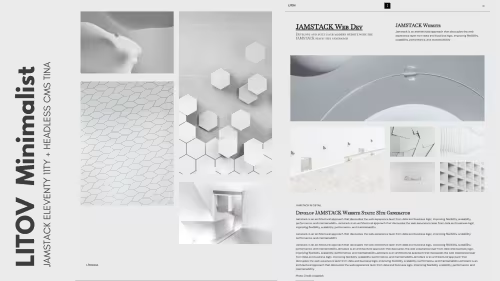
For developers who favor minimal server setups, static file hosting, and futuristic design aesthetics, Cubber - Jekyll Cyber Template offers a robust web foundation. Built specifically as a Jekyll cyber futuristic template, Cubber provides comprehensive layouts for tech portfolios, engineering blogs, visual project galleries, service listings, and custom author pages. It processes data using clear Markdown files and YAML configuration structures, making it exceptionally easy to auto-generate posts using local AI scripts or automated build routines.
Cubber features built-in automatic SEO configurations to ensure high visibility across search engines without requiring complex external plugins. Because Jekyll compiles down to static HTML files, your finished site can be self-hosted on any static web server, Nginx instance, or storage bucket with zero dynamic runtime risks. Developers receive 100% source code ownership on a straightforward one-time purchase basis, eliminating recurring framework subscriptions while delivering a fast, responsive user interface.
Pycora Pro - Python Static Site Template
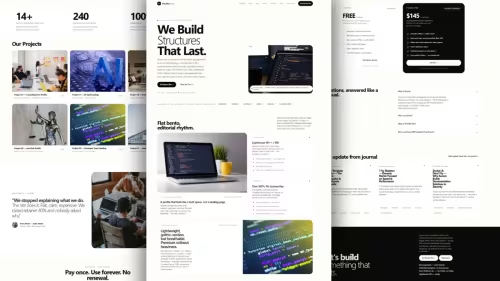
Python developers seeking to build modern, hyper-fast static websites without touching heavy Node.js environments will find Pycora Pro - Python Static Site Template to be an ideal match. Pycora Pro is a premium Python static site generator template engineered with zero Node dependencies (Zero Node). It utilizes a modern Bento Grid layout structure, making visual presentation crisp and organized.
The template comes equipped with integrated Decap CMS support, an interactive portfolio filter, pricing comparison tables, FAQ accordions, and a dedicated blog layout. Its automated SEO engine handles meta tags, open graph fields, and structured data automatically. Because Pycora Pro relies entirely on Python static build mechanisms, developers can use local Python scripts and local AI pipelines to generate markdown content, update pricing data, or construct documentation pages. Purchasing Pycora Pro provides 100% source code ownership for a single one-time payment, allowing you to self-host fast Jamstack web platforms indefinitely.
Piconic Mobile Website App UI Design
If you are building mobile-first web applications or hybrid Android container interfaces alongside your self-hosted static pages, Piconic Mobile Webiste App UI Design offers a lightweight PHP-based markdown foundation. Piconic enables developers to construct unified web apps and mobile application user interfaces without introducing heavy JavaScript frameworks or dynamic database overhead.
The platform uses Piconic PHP markdown logic to render lightweight UI components, allowing you to self-host both mobile-oriented landing pages and web app interfaces on minimal server hardware. Developers can leverage local AI coding utilities to quickly modify markdown content, add dynamic UI views, or package app frontends. Piconic provides a simple path to publishing mobile-first web experiences with minimal maintenance requirements.
Picobook Pro - Modern Markdown Website Theme
Content creators, documentation leads, and technical authors who prefer simple markdown writing environments can streamline their site builds with Elegan and modern markdown website themes template. Built around the clean Picobook Pro engine, this theme provides an elegant presentation for blogs, knowledge bases, and documentation portals using pure Markdown syntax.
Picobook Pro eliminates complex database setups, allowing you to manage your entire content inventory in raw text files stored within your version control system. This approach integrates naturally with self-hosted static web setups and local AI text workflows, enabling local AI models to draft, format, and organize documentation files automatically. By deploying this template, you maintain simple hosting costs while delivering a readable visual interface for your target audience.
GAX Pro - Premium Go Static Site Generator Theme
Engineering teams building ultra-fast static websites with Go performance can leverage GAX Pro — Premium Go Static Site Generator Theme | Hugo Alternative. Designed as a powerful alternative for developers working with Go-based static generation, GAX Pro includes automated SEO defaults, integrated Decap CMS support, the iSimple Docs documentation layout, and automatic content collections processing.
GAX Pro operates with zero node_modules dependencies, dramatically simplifying build environments and avoiding continuous dependency maintenance. It allows developer teams to build thousands of pages within seconds, making it a great match for enterprise self-hosters and high-volume content publishers. At a single one-time price of $155, GAX Pro includes rights for unlimited site deployments, granting complete engineering freedom to self-host multiple projects without recurring costs.
RentCar - Gatsby JS Car Rental Theme
For niche service businesses, regional vehicle providers, and web development agencies, RentCar - Gatsby JS Car Rental Theme with Headless Decap CMS delivers a complete commercial platform built on top of React and Gatsby JS. Engineered specifically for car rental services, limousine providers, and party bus charters, RentCar includes built-in direct email booking request forms, automated SEO metadata pipelines, and pre-configured content schema.
RentCar integrates directly with Decap CMS, allowing business operators to edit fleet inventories, adjust rates, and post service updates without editing raw code. Because Gatsby pre-renders pages into static assets at build time, self-hosting this framework yields excellent page speeds, exceptional lighthouse scores, and low hosting costs. Available for a one-time fee of $79 with unlimited project creation rights, RentCar allows web agencies to deliver fast, secure booking sites to clients.
Velat - Premium Next.js 16 Theme for AI Startups
Technology teams launching artificial intelligence products, SaaS tools, or cloud utilities require modern, production-ready landing interfaces. Velat — Premium Next.js 16 Theme for AI Startups provides a complete frontend foundation built with Next.js 16, strict TypeScript, Tailwind CSS, Markdown content pipelines, and native dark mode toggle features.
Velat includes 28 pre-rendered static pages, covering feature matrix overviews, pricing tiers, documentation hubs, company roadmaps, and blog listings. Its clean TypeScript architecture allows developers to integrate custom self-hosted AI APIs, local LLM interface endpoints, or interactive dashboard controls. Offered at a single one-time cost of $49 with unlimited client project rights, Velat eliminates recurring UI template fees, allowing your team to deploy fast AI startup platforms across self-hosted Docker containers, static host providers, or internal VPS setups.
Nuxas - Nuxt 4 Frontend Theme for SaaS & Startups
Vue.js and Nuxt developers aiming to build digital product portals can accelerate launch timelines using Nuxas - Nuxt 4 Frontend Theme for SaaS & Startup Websites. Nuxas is a production-ready Nuxt 4 frontend template engineered with strict TypeScript typing, an automated SEO optimization pipeline, native dark mode support, and structured content collections architecture.
Designed tailored for SaaS platforms, tech startups, and digital product websites, Nuxas provides modular components that render quickly across all modern web browsers. Its flexible content collections system allows teams to manage technical blogs, documentation portals, and feature launch notes using flat markdown files. By deploying Nuxas into your static self-hosted build pipeline, you enjoy the full flexibility of Vue 3 and Nuxt 4 with absolute control over source code and infrastructure deployment.
---
Feature Deep-Dive
To understand why static templates make self-hosting fun and scalable again, we must analyze the structural architecture powering these tools. Traditional self-hosted software often relies on heavy dynamic stack architectures—such as dynamic runtime interpreters, continuous background daemon processes, dynamic database servers, and multi-layered caching services. This infrastructure requires continuous monitoring, security updates, database index optimizations, and high memory hardware allocations.
Static site generators (SSGs) combined with Jamstack architecture change this operational model entirely. Engines built on Go (GAX Pro), Python (Pycora Pro), Jekyll (Cubber), Gatsby (RentCar), Next.js 16 (Velat), and Nuxt 4 (Nuxas) shift the heavy workload from end-user HTTP request time to initial compilation time.
+-----------------------------------------------------------------------+
|                       LOCAL BUILD & AI STACK                          |
|                                                                       |
|  +--------------------+   +-------------------+   +----------------+  |
|  |  Local AI Coding   |   | Markdown & YAML   |   | Decap CMS /    |  |
|  |  Assistants        |--?| Content Files     |--?| Local Editor   |  |
|  +--------------------+   +-------------------+   +----------------+  |
|                                     |                                 |
|                                     v                                 |
|               +-------------------------------------------+           |
|               | Static Site Generator (SSG) Engine        |           |
|               | (Go / Python / Jekyll / Next / Nuxt)      |           |
|               +-------------------------------------------+           |
+-----------------------------------------------------------------------+
                                      |
                           Static Compilation (HTML/CSS/JS)
                                      |
                                      v
+-----------------------------------------------------------------------+
|                    SELF-HOSTED PRODUCTION STACK                       |
|                                                                       |
|  +----------------------+   +------------------+   +---------------+  |
|  | Nginx / Caddy Web    |   | Cloud Storage    |   | Edge CDN /    |  |
|  | Server               |   | Static Buckets   |   | Static Host   |  |
|  +----------------------+   +------------------+   +---------------+  |
|                                                                       |
|  Features: Zero Dynamic DB | Zero Runtime Overhead | Fast Load Speed  |
+-----------------------------------------------------------------------+
Here is a comparative breakdown of key features across our highlighted themes:
| Theme Name | Stack / Generator | Core Features | Content & CMS Support | License / Pricing |
|---|---|---|---|---|
| Cubber | Jekyll | Cyber design, auto SEO, responsive gallery | Markdown, YAML | One-Time, 100% Source |
| Pycora Pro | Python | Zero Node, Bento Grid, fast Jamstack | Decap CMS, Markdown | One-Time, 100% Source |
| Piconic UI | Pico PHP | Mobile app & web UI framework | Markdown | One-Time |
| Picobook Pro | Pico / Markdown | Clean documentation & blog concept | Raw Markdown | One-Time |
| GAX Pro | Go Engine | Hugo alternative, Zero node_modules, iSimple Docs | Decap CMS, Collections | $155 One-Time, Unlimited Sites |
| RentCar | Gatsby JS | Direct email booking, fast SEO structure | Decap CMS | $79 One-Time, Unlimited Projects |
| Velat | Next.js 16 | 28 pre-rendered pages, TypeScript, Tailwind | Markdown, Dark Mode | $49 One-Time, Unlimited Projects |
| Nuxas | Nuxt 4 | Strict TypeScript, SEO pipeline, Dark mode | Content Collections | One-Time |
Several core technical elements make this combined workflow effective for self-hosters:
1. Decoupled Content Management via Decap CMS
Themes like Pycora Pro, GAX Pro, and RentCar integrate directly with Decap CMS (formerly Netlify CMS). Decap CMS is a git-based headless content management tool that runs entirely within the client browser. Content creators interact with an accessible admin interface, but instead of writing records to a dynamic SQL database, Decap CMS commits structured Markdown or YAML files directly to your git repository. This triggers your self-hosted CI/CD build script, generating fresh static HTML without requiring a persistent CMS database daemon on your server.
2. Elimination of Node Dependency Overhead
Template builds such as Pycora Pro (Python-based) and GAX Pro (Go-based) emphasize a "Zero Node" or "Zero nodemodules" engineering approach. Managing giant `nodemodules` folders containing thousands of nested dependencies creates potential security auditing requirements and build breakages over time. By utilizing compiled Go binaries or native Python scripts, your self-hosted build pipelines execute rapidly, remain secure, and compile in fractions of a second.
3. Local AI Automated Workflows
Because templates like Cubber, Picobook Pro, Velat, and Nuxas store page structures, metadata, and blog posts in raw Markdown format, local AI tools can interact directly with your repository. You can run local script models to bulk-generate structured frontmatter data, translate content files into multiple languages, convert documentation formats, or summarize continuous updates automatically. The local AI model edits plain text files; your static site engine converts them into pristine, optimized web pages.
4. Built-In SEO Pipelines and Pre-Rendered Markup
Search engines prioritize fast load times, valid markup structure, clear Open Graph cards, and lightweight asset transfers. Themes like Nuxas, Velat, and GAX Pro include structural SEO configurations out of the box. Canonical tags, sitemaps, JSON-LD structured schema, and meta tags are compiled automatically during build time. You obtain search engine optimization natively without installing third-party security plugins or database extension modules.
---
Who Should Upgrade
Transitioning back to self-hosted static environments using modern web templates provides tangible operational gains across multiple tech profiles:
1. Self-Hosting Developers & Sysadmins
If you operate your own home lab, virtual private servers (VPS), or micro-cluster environments, managing heavy database-backed website systems adds unnecessary maintenance. Upgrading your web projects to templates like Cubber - Jekyll Cyber Template or GAX Pro — Premium Go Static Site Generator Theme | Hugo Alternative allows you to host fully responsive platforms using static Nginx or Caddy containers. You reduce server memory usage down to megabytes rather than gigabytes, protect your server from web vulnerability exploits, and eliminate database backup overhead.
2. AI Startup Founders & Software Engineers
Engineers launching modern AI tools or developer software need landing pages, technical documentation portals, and marketing sites that reflect their brand quality. Instead of spending weeks coding landing page UI components, developers can adopt Velat — Premium Next.js 16 Theme for AI Startups or Nuxas - Nuxt 4 Frontend Theme for SaaS & Startup Websites. With 28 pre-rendered pages, strict TypeScript codebases, and native dark mode options, tech founders can deploy launch sites immediately and maintain 100% control over their front-end codebase.
3. Independent Agencies & Niche Business Operators
Web design agencies and digital consultants building sites for small businesses, transportation services, or rental fleets require fast development workflows with zero recurring software overhead. Deploying platforms like RentCar - Gatsby JS Car Rental Theme with Headless Decap CMS provides clients with fast booking interfaces and built-in Decap CMS content editing. Agencies pay a single one-time fee for unlimited project licensing, allowing them to host static sites for clients affordably without incurring ongoing cloud software costs.
4. Content Creators & Documentation Authors
Writers, technical documentation leads, and bloggers who prefer focus-mode text editors over cluttered CMS admin panels will benefit from Pycora Pro - Python Static Site Template or Elegan and modern markdown website themes template. Drafting content in clean Markdown while letting automated static generators compile final pages provides a fast writing experience. Paired with local AI assistants, content creators can manage extensive documentation portals easily.
---
Verdict
The combination of local AI assistance and static site technology has made self-hosting fun, fast, and highly practical again. By shifting away from complex database servers and recurring SaaS subscriptions, web developers regain complete ownership over their content pipelines, build architectures, and hosting costs. Using local AI coding models alongside clean text files gives developers an efficient workflow for building digital products, personal tech blogs, documentation portals, and commercial booking sites.
However, writing UI components, CSS grid systems, dark mode toggles, and SEO meta tags from scratch consumes time that is better spent building your primary software product. Premium static themes bridge this gap effectively. Whether you select the futuristic styling of Cubber - Jekyll Cyber Template, the zero-node performance of GAX Pro — Premium Go Static Site Generator Theme | Hugo Alternative, the Python simplicity of Pycora Pro - Python Static Site Template, or the modern frontend frameworks of Velat — Premium Next.js 16 Theme for AI Startups and Nuxas - Nuxt 4 Frontend Theme for SaaS & Startup Websites, these templates deliver production-ready foundation code with complete source ownership.
By choosing robust static templates, paying a single one-time licensing fee, and deploying assets to simple static web hosting, you achieve peak performance, lower operational expenses, and maintain full control of your web stack.
Explore All Premium Themes
Visit Premium Themes.
← PaperHouse - Astro Bento Portfolio Template - Works, Blog, Docs, Order vs ForgeDocs — All-in-One Astro Starlight Theme for Landing Page, Documentation, and Blog - Honest Feature ComparisonWe Tested Text-X Pro - Bludit Minimalist Blog Template - Clean, Minimal - Here's What You Need to Know →
Need Custom?
Hire via Fiverr Escrow
72+ verified reviews, escrow protected.
ORDER CUSTOM →