PaperHouse - Astro Bento Portfolio Template - Works, Blog, Docs, Order vs ForgeDocs — All-in-One Astro Starlight Theme for Landing Page, Documentation, and Blog - Honest Feature Comparison
Compare PaperHouse and ForgeDocs Astro themes. PaperHouse offers a $45 Tailwind 4 bento portfolio while ForgeDocs delivers a $79 Starlight docs and SaaS platform.
astro • astro-template • bento-portfolio • starlight-theme • tailwind-template • documentation-theme • saas-theme • blog-template •

Table Of Content
- Introduction
- Overview of PaperHouse - Astro Bento Portfolio Template - Works, Blog, Docs, Order
- Overview of ForgeDocs — All-in-One Astro Starlight Theme for Landing Page, Documentation, and Blog
- Features Comparison
- Core Framework and Technical Architecture
- Content Management and Data Storage Model
- Visual Design System and User Interface
- Documentation Engine Capabilities
- Blog and Article Publishing Features
- Search Engine Optimization and Analytics Readiness
- Pricing
- Who Should Choose PaperHouse - Astro Bento Portfolio Template - Works, Blog, Docs, Order
- Who Should Choose ForgeDocs — All-in-One Astro Starlight Theme for Landing Page, Documentation, and Blog
- Verdict
- See It Live
- Related Themes
Introduction
Modern web development demands fast load times, concise visual communication, and maintenance workflows that do not burden creators with complex software dependencies. Independent developers, creative agency owners, and software engineers frequently face a foundational choice when establishing their digital footprint: how to structure their online presence to maximize clarity, audience engagement, and long-term maintainability. Content-driven websites built on static site generators have emerged as the industry standard for achieving near-instant page loads and zero client-side JavaScript overhead by default.
Astro has established itself as a leading framework for content-focused web development. By outputting pure HTML and minimal CSS, it provides an ideal foundation for portfolios, technical documentation platforms, corporate blogs, and product landing pages. However, selecting an appropriate starter theme depends heavily on your specific business goals, content architecture, and functional requirements. A developer selling consulting services or custom design work needs a completely different set of components than a software team launching a SaaS application or open-source developer tool.
This technical comparison evaluates two distinct premium themes built within the Astro ecosystem: PaperHouse and ForgeDocs. While both themes leverage Astro's component architecture to deliver fast build outputs and search engine optimization, their structural paradigms, visual languages, content management strategies, and target audience profiles fulfill different roles. PaperHouse delivers a tactile bento box portfolio for studios, individual creators, and consultants who need integrated work showcases, editorial journals, lightweight documentation, and order inquiry flows. ForgeDocs, conversely, combines Astro Starlight with landing page components to provide an all-in-one technical platform featuring multi-level documentation, fast search capabilities, marketing layouts, and blog management for software tools.
Overview of PaperHouse - Astro Bento Portfolio Template - Works, Blog, Docs, Order
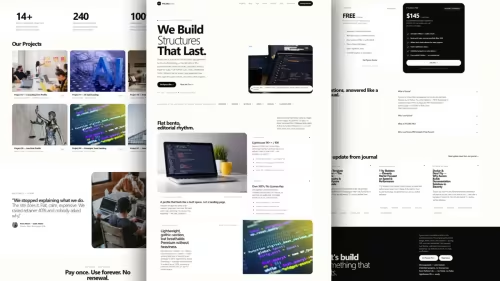
PaperHouse is a premium portfolio template engineered for creators who prioritize clear visual organization, typography, and content-driven conversions. Built on Astro 7 and Tailwind CSS 4, PaperHouse employs a modern bento box layout structure. This aesthetic divides visual content into structured, interactive grid cards, making it straightforward to present diverse content types—such as recent client work, service packages, client testimonials, tech stacks, and live announcements—on a single landing surface.
Available for a one-time purchase price of $45, PaperHouse addresses the needs of modern digital craftspeople, creative studios, technical writers, and boutique agency founders. It includes dedicated page structures for showcasing completed work projects, publishing an editorial journal, rendering lightweight product or template documentation, and capturing direct service orders or client inquiries through an integrated order page. Rather than hardcoding content directly into layout files, PaperHouse relies entirely on a combined Markdown and JSON data system. This design choice ensures that users can modify branding colors, typography scales, site meta information, project items, and pricing structures by updating isolated data files without editing component logic.
The design philosophy behind PaperHouse emphasizes what its creators describe as "Slow Web" principles—using spatial breathing room, grain textures, subtle marquee animations, and deliberate type hierarchy to create a calm, tactile browsing experience. It ships with per-page search engine optimization handling, smooth route transitions, zero client-side framework overhead, and complete step-by-step local setup instructions.
Overview of ForgeDocs — All-in-One Astro Starlight Theme for Landing Page, Documentation, and Blog
ForgeDocs is an all-in-one theme designed specifically for software products, SaaS startups, open-source libraries, and developer toolkits. Built on top of Astro 7.3+ and the official Astro Starlight documentation framework, ForgeDocs unifies high-converting SaaS landing page layouts, full-featured technical documentation, and an article blog under a unified project directory and deployment pipeline.
Priced at $79 as a one-time purchase with lifetime updates and unlimited project usage, ForgeDocs solves the common fragmentation problem where companies maintain marketing landing pages on one framework and technical docs on an isolated third-party platform. Its visual design system draws inspiration from Fluent UI and shadcn design standards, delivering crisp typography, clear UI cards, dark/light theme switching, code block formatting, and interactive navigation elements out of the box.
Architecturally, ForgeDocs is driven by JSON configuration files alongside Markdown/MDX content collections. It features automated sidebar generation for documentation hierarchies, quick keyboard search (Ctrl+K), and structured frontmatter handling for full green search engine optimization scores. Additionally, ForgeDocs offers an optional Decap CMS package, enabling non-technical technical writers, product managers, or marketing team members to publish and update blog posts and documentation articles through a Git-backed headless content management visual dashboard.
Features Comparison
Core Framework and Technical Architecture
PaperHouse is constructed on top of Astro 7 paired with Tailwind CSS 4. This technological stack offers ultra-fast build times, low file sizes, and modern CSS utility compilation. The layout relies heavily on CSS Grid and Flexbox primitives optimized for responsive bento box presentations across mobile, tablet, and desktop viewports. PaperHouse avoids heavy JavaScript reliance entirely, delivering pure static pages that load rapidly across weak network connections.
ForgeDocs utilizes Astro 7.3+ integrated directly with Astro Starlight, the specialized documentation framework maintained by the core Astro team. This provides ForgeDocs with a structured foundation designed explicitly for multi-page documentation trees, technical specifications, and API guides. The visual presentation layers leverage Fluent UI and shadcn design principles, providing standardized UI components such as badges, collapsible content sections, responsive mobile drawers, and dark mode toggling without requiring external UI library installations.
Content Management and Data Storage Model
PaperHouse strictly enforces zero hardcoded content within its template files. Content creators manage the site using a combination of Markdown files (for long-form journal posts, work case studies, and documentation articles) and JSON configuration files (for global site settings, navigation items, hero section strings, marquee banner text, and pricing tiers). Updating a hero text string or adding a new portfolio work item involves editing simple data objects, making site maintenance straightforward even for non-developers familiar with text editors.
ForgeDocs similarly adopts a data-driven structure using JSON files for landing page section data, feature grids, pricing tables, and global navigation menus. Documentation and blog posts are stored as Markdown or MDX files within Astro's content collections structure. Furthermore, ForgeDocs includes full compatibility instructions and config files for Decap CMS. This optional Git-based headless content management interface allows team members to create, edit, draft, and publish technical documentation and blog articles via an intuitive web application without opening terminal windows or making manual Git commits.
Visual Design System and User Interface
The visual language of PaperHouse centers on an editorial, tactile aesthetic. It uses bento cards with distinct border styling, grain texture accents, soft typography scales, and fluid marquee components designed to convey technical precision alongside creative artistry. The layout balances dark and soft earth tones, giving studios and consultants a distinctive visual identity that stands out from standard corporate landing pages. Customizing branding colors, font families, and border radii in PaperHouse requires updating global CSS variables and Tailwind configuration files.
ForgeDocs adopts a clean, developer-focused software interface. Influenced by modern enterprise software design systems like Fluent UI and shadcn, its components emphasize high legibility, structured code blocks, clear callout alerts, and structured data grids. Landing page components include hero badges, feature highlight cards, pricing tiers, testimonial grids, and quick navigation actions. The UI supports single-click dark and light mode switching, ensuring comfortable readability across diverse lighting environments.
Documentation Engine Capabilities
Documentation in PaperHouse is designed for lightweight usage. It provides clean, readable article templates suitable for software installation instructions, template usage guides, client onboarding handbooks, or service terms. While highly readable, PaperHouse does not include multi-tiered sidebar hierarchies or full-text client-side documentation search engines, as its primary purpose remains individual portfolio branding and direct client acquisition.
ForgeDocs is built specifically for technical documentation. By harnessing Astro Starlight, it provides multi-depth sidebars with collapsable categories, active link highlighting, on-page table of contents generation, and built-in full-text search accessible via keyboard shortcuts (Ctrl+K). Documentation writers can easily create multi-page user guides, API reference specs, software SDK manuals, and troubleshooting indices without writing custom routing logic.
Blog and Article Publishing Features
PaperHouse includes a dedicated "Journal" or blog section optimized for deep-dive case studies, technical articles, and studio announcements. Each journal post is powered by Markdown frontmatter metadata, supporting publication dates, categories, author signatures, estimated reading times, and open graph image references. The blog listing page presents articles in a structured card layout consistent with the overall bento grid aesthetic.
ForgeDocs contains a dedicated product blog ecosystem alongside its Starlight documentation pages. Designed for software release notes, product updates, developer tutorials, and content marketing, the blog system integrates with the site's overall search engine optimization setup. Blog posts support author profiles, publication dates, tagged categories, draft modes, and formatted MDX components such as interactive code blocks and visual notification cards.
Search Engine Optimization and Analytics Readiness
Both themes prioritize search engine visibility through native Astro static HTML rendering. PaperHouse builds open graph metadata, canonical URL tags, meta description attributes, and structured page headers into every route automatically based on local Markdown frontmatter and global JSON settings. Its clean HTML tree guarantees high Google Lighthouse performance scores across performance, accessibility, and SEO metrics.
ForgeDocs targets full green Google Lighthouse SEO benchmarks out of the box. Every landing page section, documentation node, and blog post automatically generates correct structured meta attributes, sitemap references, Twitter card metadata, and canonical page identifiers. The code layout complies with modern Web Content Accessibility Guidelines (WCAG), ensuring optimal screen reader support and search engine crawler indexing.
Pricing
When selecting a theme, understanding the license structure, lifetime cost, and included support packages is essential for budget planning.
PaperHouse is available for a one-time purchase price of $45. This price includes full access to the Astro 7 + Tailwind 4 source repository, complete bento grid layout components, the works showcase module, journal blog template, lightweight docs layout, order inquiry page, and installation documentation. There are no recurring subscription fees, and developers receive all core template files required to build, customize, and deploy their personal or studio portfolio site indefinitely.
ForgeDocs costs $79 as a one-time purchase. This fee grants a lifetime license covering usage across unlimited personal and commercial projects, continuous theme updates, landing page components, full Astro Starlight documentation features, blog modules, deployment guides for popular static hosts, and the optional Decap CMS setup package. The unlimited project license makes ForgeDocs cost-effective for agencies, independent consultants, and software developers who frequently deploy technical documentation portals for multiple client applications or open-source projects.
| Feature / Aspect | PaperHouse | ForgeDocs |
|---|---|---|
| Price | $45 (One-time) | $79 (One-time) |
| Primary Use Case | Bento Portfolio, Works, Journal, Services | SaaS Landing Page, Product Docs, Blog |
| Core Framework | Astro 7 + Tailwind CSS 4 | Astro 7.3+ + Astro Starlight |
| Design Style | Tactical Bento Grid / Editorial "Slow Web" | SaaS UI / Fluent UI + shadcn inspired |
| Data Architecture | Markdown + JSON (Zero Hardcoded) | Markdown/MDX + JSON + Optional Decap CMS |
| Documentation System | Lightweight static doc pages | Full Astro Starlight (Ctrl+K search, sidebar) |
| Client Ordering/Inquiry | Dedicated Order page & intake components | CTA components linking to external checkout |
| License Scope | Personal / Studio portfolio project | Unlimited commercial & personal projects |
Who Should Choose PaperHouse - Astro Bento Portfolio Template - Works, Blog, Docs, Order
PaperHouse is specifically engineered for professionals whose business model revolves around showcasing high-quality individual output and capturing high-value client inquiries.
- Independent Designers and Creative Technologists: Creative directors, UI/UX designers, and frontend engineers who want a non-traditional bento grid showcase to display visual project case studies, code repositories, and design philosophy in an editorial aesthetic.
- Boutique Agencies and Creative Studios: Small design or development studios that sell packaged digital services, custom web design builds, or physical creative products, requiring an integrated order page with clear pricing tiers and service descriptions.
- Digital Template and Asset Sellers: Creators who build and market Astro templates, design kits, or font families and need a cohesive platform containing product landing cards, visual marquee banners, simple usage docs, and news journals.
- Freelance Consultants and Technical Writers: Independent professionals who require a clean personal website to publish long-form technical articles, list service offerings, feature client feedback, and accept direct consulting bookings.
To explore detailed template specifications, component layouts, and code documentation, review the official PaperHouse product page.
Who Should Choose ForgeDocs — All-in-One Astro Starlight Theme for Landing Page, Documentation, and Blog
ForgeDocs is designed for software creators who need a unified, professional online hub for technical software products.
- SaaS Product Founders and Development Teams: Software startups that need a unified website containing a high-converting marketing landing page, feature showcase cards, subscription pricing tables, and complete product documentation hosted under a single root domain.
- Open-Source Maintainers and SDK Authors: Software engineers maintaining open-source libraries, APIs, or CLI tools who require fast keyboard search (Ctrl+K), multi-tier sidebar navigation, code highlighting, and changelog blogs for their user base.
- Technical Writing Teams Requiring CMS Interfaces: Organizations where technical documentation and marketing blogs are maintained by content creators who benefit from a visual Git-backed headless editor (Decap CMS) rather than editing codebase files manually.
- Development Agencies with Multiple Client Builds: Consultants and software agencies who want an unlimited-use license to rapidly spin up product landing pages and documentation hubs across diverse client software projects.
For a full breakdown of starlight navigation options, CMS configuration guides, and deployment setup instructions, consult the official ForgeDocs product page.
Verdict
Both PaperHouse and ForgeDocs showcase the flexibility, speed, and clean code output of the Astro ecosystem. Neither theme forces developers into heavy client-side JavaScript runtimes, ensuring fast initial page loads, high Lighthouse performance scores, and strong search engine accessibility.
Choosing between these two themes comes down to your primary site objective, visual design preferences, and required functional feature set:
Select PaperHouse if your goal is to present a personal craft, showcase design case studies, share long-form articles, and capture client service bookings or template sales through a visually distinct bento grid design system. At $45, it offers an economical, easy-to-customize solution for creative individuals and boutique studios who value editorial aesthetics and simple Markdown/JSON content maintenance.
Select ForgeDocs if you are building a technical software application, SaaS platform, open-source library, or API tool that requires an integrated ecosystem featuring landing page conversion sections, structured multi-page documentation with built-in search, a release blog, and optional headless CMS editing. At $79 with an unlimited project license, ForgeDocs provides an enterprise-ready technical hub that eliminates the need to manage separate marketing and documentation tech stacks.
See It Live
To experience the interactive performance, responsive typography, and layout navigation of both themes firsthand, view their live interactive demonstration environments:
Demo A: PaperHouse - Astro Bento Portfolio Template - Works, Blog, Docs, Order
Demo B: ForgeDocs — All-in-One Astro Starlight Theme for Landing Page, Documentation, and Blog
Related Themes
Explore our full collection of production-ready static site solutions, documentation platforms, and agency themes:
Discover all available layouts at All Themes and view enterprise-grade options at Premium Themes.
← We Tested Text-X Pro - Bludit Minimalist Blog Template - Clean, Minimal - Here's What You Need to KnowWhy Service degradation on Microsoft 365 Matters and Which Premium Themes Nail It →
Need Custom?
Hire via Fiverr Escrow
72+ verified reviews, escrow protected.
ORDER CUSTOM →