PaperHouse - Astro Bento Portfolio Template - Works, Blog, Docs, Order in 2026: What Makes It Stand Out
PaperHouse is a premium Astro 7 + Tailwind 4 bento portfolio template with works, blog, docs, and order page. Markdown-driven, SEO-ready, one-time $45.
astro • astro-template • bento-portfolio • portfolio-template • blog-template • docs-template • astro-theme • tailwind-template •

Table Of Content
- Introduction
- What is PaperHouse - Astro Bento Portfolio Template - Works, Blog, Docs, Order?
- Key Features
- Astro 7 and Tailwind 4 Core Architecture
- Modular Bento Grid Layout and Hero Marquee
- Markdown and JSON Content Architecture
- Comprehensive Multi-Page Architecture: Works, Journal, and Docs
- Built-in Monetization via the Order and Contact Flow
- Systemic Rebranding: Customizing Colors, Fonts, and Border Radius
- Performance and SEO
- Pricing
- Who Is This For?
- Who Should Skip This?
- Verdict
- See It Live
- Related Themes
Introduction
Building a modern online presence in 2026 often forces creators to make undesirable compromises. Freelancers, digital studios, technical writers, and software engineers frequently spend dozens of hours wrestling with heavy JavaScript frameworks, complex single-page app architectures, or visual website builders that slow down page loads and lock content into proprietary ecosystems. Many off-the-shelf templates look attractive on the surface but lack practical structure when you need to publish technical documentation, maintain a long-form studio journal, present a structured portfolio of work, and capture client inquiries—all within a unified interface.
Another common technical hurdle is content maintenance. Traditional templates often rely on hardcoded text inside deep HTML or UI component structures. Every time you want to add a client project, post a quick technical article, or update a service package, you end up manually editing component layouts, risking layout shifts and breaking CSS utilities. Conversely, full-scale Content Management Systems (CMS) often introduce server overhead, database maintenance costs, and security update cycles that independent creators simply do not need for a personal or studio site.
This is where the bento grid paradigm combined with static site generation offers a pragmatic path forward. By organizing content into clear, rectangular modules—or "bento boxes"—a site can display diverse content streams cleanly on a single screen without confusing visitors. PaperHouse - Astro Bento Portfolio Template - Works, Blog, Docs, Order tackles these specific challenges head-on. Built on top of modern frontend foundations, it gives creators a lean, markdown-driven portfolio system that combines creative layout design with zero-hardcode data structures.
What is PaperHouse - Astro Bento Portfolio Template - Works, Blog, Docs, Order?
PaperHouse is a premium portfolio theme designed around the modern Astro 7 web framework and styled using Tailwind CSS v4. Priced at a flat $45 one-time fee, it provides a full studio website architecture straight out of the box. Rather than serving as a basic single-page landing layout, PaperHouse includes a complete array of dedicated sub-pages, including an About view, a Works (portfolio showcase) collection, a Journal (blog) engine, a multi-page Documentation system, and an integrated Order page designed to capture client inquiries and project briefs.
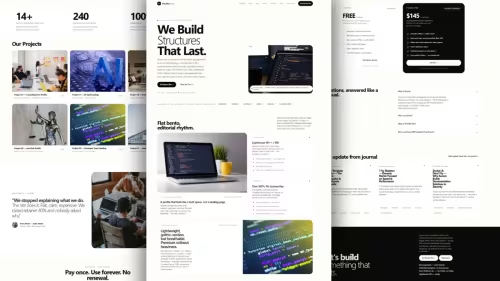
Visually, PaperHouse leans into what its creators call a "quiet web" or "slow web" aesthetic. It pairs deliberate typographic hierarchy with visual breathing room, subtle background grain, and organized bento grid modules. Instead of distracting site visitors with complex heavy animations, the template highlights project deliverables, written work, and service offerings in a clean format optimized for rapid reading and intuitive browsing across desktop and mobile screens.
From an architecture perspective, PaperHouse relies entirely on a zero-hardcode philosophy. Site copy, project lists, documentation navigation, social links, and configuration parameters live in structured Markdown files and JSON data assets. This means creators do not need deep JavaScript knowledge to maintain or expand their site. If you know how to format a text document using Markdown frontmatter and basic syntax, you can add portfolio entries, edit client case studies, or publish long-form technical guides without touching structural UI code.
Under the hood, Astro 7 handles static page compilation while Tailwind 4 provides utility styling. Setting up and launching the theme locally requires standard web tooling: downloading the template files, installing dependencies via Node package managers, and executing the local dev command. When you are ready to ship, the project compiles down to optimized HTML and CSS assets ready for instant deployment to static hosting platforms such as Cloudflare Pages, Vercel, Netlify, or standard web hosting servers.
Key Features
Astro 7 and Tailwind 4 Core Architecture
At its core, PaperHouse leverages Astro 7 to achieve exceptionally fast page loads by compiling components into zero-client-JavaScript static HTML whenever possible. JavaScript is only shipped when interactive components demand it, reducing network payload sizes and eliminating client-side rendering bottlenecks. Styled with Tailwind CSS 4, the template uses contemporary CSS variable structures and utility classes, making site-wide styling rules crisp and easy to inspect. The framework choices guarantee long-term maintainability, as both Astro and Tailwind enjoy vast ecosystem adoption and stable documentation standards.
Modular Bento Grid Layout and Hero Marquee
The front page of PaperHouse centers on a bento grid structure, organizing distinct functional tiles into a cohesive dashboard layout. Visitors can view key portfolio highlights, current studio status, featured technical docs, and direct call-to-action buttons in a single, well-proportioned view. The header hero region incorporates a clean marquee ticker that dynamically scrolls custom announcements, tech tags, or brand statements. This marquee provides subtle motion to draw reader focus toward high-priority updates without introducing performance penalties or screen jank.
Markdown and JSON Content Architecture
PaperHouse eliminates hardcoded component text by routing content through Markdown files and JSON configurations. Blog posts, portfolio case studies, and documentation articles are written in plain Markdown, complete with frontmatter metadata fields for title tags, publication dates, excerpts, and hero images. Global navigation links, social profile lists, footer details, and hero content are managed inside central JSON files. This structural separation allows designers and content authors to focus purely on writing and media curation while keeping the layout logic pristine and untouched.
Comprehensive Multi-Page Architecture: Works, Journal, and Docs
While many portfolio templates only offer a home page with basic pop-up modals, PaperHouse includes dedicated, multi-page layout routes designed for heavy content publishing:
- Works Page: A structured showcase for client projects, software releases, or design case studies, allowing readers to view project summaries and click through into detailed individual project pages.
- Journal (Blog) Engine: A full-featured blogging route configured for long-form writing, technical articles, studio logs, and industry thoughts.
- Documentation System: A clean, multi-page docs structure designed to host user guides, API docs, library usage instructions, or studio service policies complete with organized sidebar navigation.
Built-in Monetization via the Order and Contact Flow
Converting portfolio traffic into paid client work or product sales is a key goal for independent creators. PaperHouse addresses this directly with its dedicated Order page layout. Designed to function as a client intake mechanism, the page presents clear project packaging choices, service tier descriptions, pricing parameters ($45 pricing markers or custom service quotes), and an integrated contact inquiry form. This structured path guides potential clients from initial interest directly into sending a formal project brief.
Systemic Rebranding: Customizing Colors, Fonts, and Border Radius
Adapting PaperHouse to match your personal identity or studio branding requires zero complex code refactoring. The template exposes key visual configuration tokens through centralized CSS variables and Tailwind settings. You can quickly rebrand the entire website by altering primary background colors, accent tints, typography stacks, and UI container border-radius properties. Whether your studio aesthetic favors sharp pixel-perfect corners with high-contrast serif typography or soft rounded bento cards with minimalist sans-serif fonts, the design system updates globally with minimal editing.
Performance and SEO
Performance and search engine optimization are fundamental to the technical construction of PaperHouse. Because Astro 7 builds static pages by default, the output served to site visitors consists of clean, pre-rendered HTML and minimal CSS. This structure leads to fast Time to First Byte (TTFB) and excellent First Contentful Paint (FCP) metrics, ensuring that readers on mobile connections or slower networks encounter virtually zero delay when accessing your content.
Search engine optimization (SEO) is handled automatically on a per-page basis. The template includes built-in SEO head components that read page metadata directly from Markdown frontmatter and JSON configurations. Title tags, open-graph metadata for social sharing previews, canonical URLs, and meta descriptions are automatically generated and injected into the ?head? of every rendered route. You can easily define custom share images and page descriptions for individual portfolio case studies or journal entries to ensure optimal presentation across social media platforms and search engine result pages.
Deploying a PaperHouse site is straightforward due to its static output pipeline. The project includes ready-to-use build commands (npm run build) that output static assets into a build folder. These compiled files can be hosted directly on static platforms like Cloudflare Pages, GitHub Pages, Vercel, or Netlify with zero server-side setup or runtime configuration needed.
Pricing
PaperHouse is offered as a single, one-time purchase of $45. There are no recurring monthly subscription fees, hidden template licensing surcharges, or locked feature tiers.
When evaluated against monthly website builder subscriptions that charge ongoing fees for basic custom domain support and custom code access, a one-time $45 investment for a fully owned code repository offers significant long-term value. Purchasers receive complete access to the source code, allowing unlimited local customization, self-hosting capability, and zero vendor lock-in.
Who Is This For?
PaperHouse is purposefully engineered for specific professional user profiles who need a clean, content-focused site:
- Independent Design Studios & Creative Freelancers: Agencies and solo designers who want a quiet, typography-focused visual aesthetic to showcase client work, present transparent service pricing, and convert leads through an integrated order page.
- Technical Writers & Open Source Developers: Engineers who need more than just a simple link tree. The built-in Docs and Journal routes make it simple to host technical documentation, tutorial series, software changelogs, and deep-dive technical articles side by side with personal portfolio projects.
- Digital Product Creators: Creators selling digital assets, code starter kits, or consulting services who require a high-converting, markdown-managed landing site that builds client trust through clear visual hierarchy.
- Minimalist Content Creators: Writers and bloggers who prefer working in local Markdown text editors like Obsidian, VS Code, or iA Writer, avoiding bloated web builder interfaces and database setups.
Who Should Skip This?
While PaperHouse offers a strong toolkit for static portfolios and content publishing, it may not fit every project requirement:
- Complex Web Application Developers: If your project requires heavy dynamic real-time user authentication, interactive client dashboards, live database queries, or server-side user session management out of the box, a pure static portfolio template will require custom backend integration.
- Non-Technical Users Seeking Drag-and-Drop Builders: While editing text in PaperHouse only requires editing Markdown and JSON files, initializing the template locally and pushing builds to hosting platforms still requires basic terminal command usage and familiarity with code repositories. Users who strictly prefer visual drag-and-drop page builders without touching project files may find traditional SaaS site builders more accessible.
Verdict
PaperHouse - Astro Bento Portfolio Template - Works, Blog, Docs, Order stands out as a thoughtful, developer-friendly theme for modern web publishing. By pairing Astro 7's static rendering speed with Tailwind 4's flexible utility ecosystem, it delivers a high-performance foundation that respects visitor bandwidth and search engine requirements.
The template's greatest strength lies in its zero-hardcode, markdown-driven approach combined with a versatile content structure. Rather than forcing creators to cobble together separate systems for their blog, client work, documentation, and services, PaperHouse unifies these workflows into a cohesive bento-grid presentation. At a flat $45 price point, it provides creators and studios with a robust, self-hosted web presence that is easy to customize, rapid to deploy, and simple to maintain over time.
See It Live
Read the full theme details at PaperHouse - Astro Bento Portfolio Template - Works, Blog, Docs, Order.
Try the demo: Demo
Related Themes
Explore more at All Themes and Premium Themes.
← Why Service degradation on Microsoft 365 Matters and Which Premium Themes Nail ItCubber - Jekyll Cyber Template - Futuristic, Multipurpose, Portfolio Review: Is It Worth It in 2026? →
Need Custom?
Hire via Fiverr Escrow
72+ verified reviews, escrow protected.
ORDER CUSTOM →