Tailwind Blog - Bludit Tailwind CSS Template - Minimalist Blog Explained: Who Is It For and Who Should Skip It
Bludit Tailwind CSS blog template with minimalist design, fast, SEO auto. Flat-file, utility-first, responsive, own 100% source, one-time.
bludit • tailwind-template • tailwind-blog • tailwind-css • minimalist-blog • bludit-template • flat-file-cms • premiumthemes •
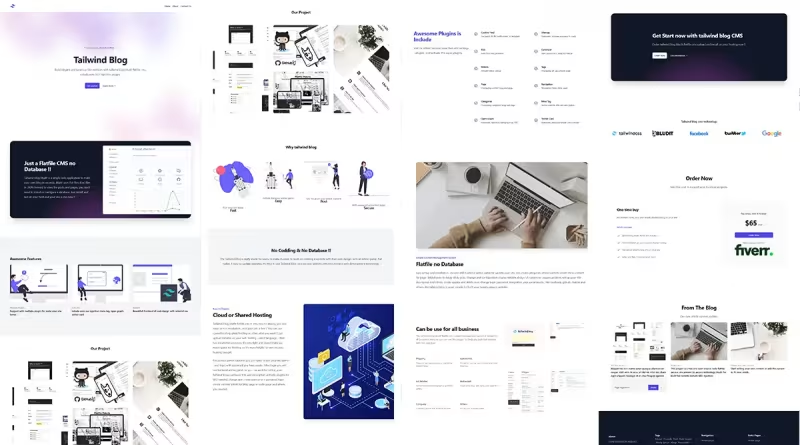
Table Of Content
- Introduction
- What is Tailwind Blog - Bludit Tailwind CSS Template - Minimalist Blog?
- Key Features
- Flat-File Architecture Without Database Dependencies
- Utility-First Responsive Styling with Tailwind CSS
- Streamlined Installation and User Security Setup
- Automated Search Engine Optimization SEO
- Flexible Content Organization: Categories, Sticky Posts, and Custom Tabs
- Modular Landing Page Building and Full Source Ownership
- Performance and SEO
- Pricing
- Who Is This For?
- Technical Authors and Developer-Bloggers
- Web Design Agencies and Freelancers
- Minimalist Content Creators and Essayists
- Privacy-Conscious Webmasters
- Who Should Skip This?
- Non-Technical Users Expecting Drag-and-Drop Builders
- Enterprise Platforms Requiring Complex Relational Data
- Projects Needing Rich Visual Agency Themes
- Verdict
- See It Live
- Related Themes
Introduction
Managing a modern digital publication often comes with unexpected technical friction. For years, content creators and web developers have relied heavily on traditional relational database-driven Content Management Systems (CMS). While platforms relying on MySQL or PostgreSQL offer deep plugin ecosystems, they also introduce complex maintenance requirements. Web managers routinely spend hours handling database migration scripts, fixing broken database connection sockets, patching security vulnerabilities inherent in SQL-driven endpoints, and optimizing heavy server-side query caches just to serve plain text and images to site visitors.
As web performance metrics become increasingly tied to user retention and search engine visibility, the overhead of conventional database systems has caused significant operational slowdowns. Every page request requires server-side execution, database querying, and runtime template parsing before a single byte of HTML reaches the browser. When scaling up content delivery, these redundant processing steps require complex caching layers like Redis or Varnish, turning what should be a simple publishing process into a difficult infrastructure engineering task.
The need for a simpler approach has led to the rise of flat-file content management architectures paired with utility-first CSS design systems. By storing articles directly as structured text files and applying lightweight, utility-based stylesheets, content creators can eliminate database latency entirely. The Tailwind Blog - Bludit Tailwind CSS Template - Minimalist Blog addresses this need directly. It offers a lightweight, database-free publishing system designed for authors, developers, and agency builders who want high speed, complete code control, and simple deployment.
What is Tailwind Blog - Bludit Tailwind CSS Template - Minimalist Blog?
The Tailwind Blog - Bludit Tailwind CSS Template - Minimalist Blog is a minimalist publishing template designed specifically for the Bludit flat-file engine. Bludit operates without requiring a traditional SQL database. Instead, it processes articles, static pages, and system configurations directly from text files formatted in JSON. This architectural choice radically alters how content is stored and served, converting content handling into simple file read-and-write operations that execute in milliseconds.
On the front end, the template leverages Tailwind CSS, a utility-first styling framework. Rather than forcing developers to work with pre-built component abstractions or heavy monolithic CSS bundles, Tailwind CSS provides low-level utility classes directly within the layout structure. This allows developers to adjust margins, typography, flexbox layouts, grid positions, and responsive break points without writing custom CSS overrides or dealing with style rule conflicts. The result is a clean visual style focused entirely on readable typography and fast page loads.
This template is tailored for content creators, software engineers writing technical blogs, and digital agencies building minimalist client portals. It strips away complex background services, giving developers full ownership of the source code. Because there are no dynamic database engines or external third-party service dependencies required to render content, sites using this theme can be hosted on standard server environments, low-cost virtual private servers, or simple static file hosting systems with minimal setup.
By providing direct control over templates, automatic search engine optimization, and native support for core layout components, the template delivers a focused content management environment. Users receive a complete, single-purchase software layout that functions immediately out of the box without requiring subscriptions, proprietary third-party libraries, or complex setup pipelines.
Key Features
Flat-File Architecture Without Database Dependencies
By utilizing Bludit’s core design, this template stores all blog posts, pages, and metadata within standard JSON files on the web server's filesystem. This eliminates the need for database drivers like PDO or MySQLi, avoiding database connection failures under heavy traffic spikes. System back-ups become as simple as copying a directory folder, while content migrations require only uploading files via standard SSH or FTP tools. Without SQL database queries executing during visitor requests, page latency drops dramatically, allowing web servers to handle higher concurrency using significantly fewer memory resources.
Utility-First Responsive Styling with Tailwind CSS
The theme’s design framework relies entirely on Tailwind CSS utility classes embedded directly within Bludit’s template files. Every layout component—from header navigation bars to full article grid layouts—is defined using responsive utility directives. This setup guarantees that the user interface scales across screen resolutions, including mobile phones, tablets, and wide desktop monitors. Developers can easily customize spacing, background colors, and typography by editing class names directly in the template markup, eliminating the need to write custom CSS or debug specificity issues.
Streamlined Installation and User Security Setup
Deploying the template is straightforward. Users unpack the Bludit engine, place the theme directory into the designated themes folder, and complete a short setup wizard. The theme includes standard configuration procedures for securing administrator access. Content managers can set up user accounts, restrict permissions, and configure authentication credentials through Bludit's simple admin control panel. This isolates sensitive system configurations while keeping the administrative workflow clear and free of unnecessary dashboard widgets.
Automated Search Engine Optimization (SEO)
The template automates essential search engine optimization tasks without requiring external third-party plugins. It generates standard meta tags, open graph metadata, clean canonical URLs, and structured header tags automatically from your post content. Titles, descriptions, and publish dates are pulled directly from the flat-file JSON headers of each page and parsed into semantic HTML elements. This ensures search engine crawlers can index site pages efficiently without manual meta-tag markup on individual posts.
Flexible Content Organization: Categories, Sticky Posts, and Custom Tabs
Content management is organized through intuitive structural tools. Authors can sort posts into distinct categories for easy reader navigation or designate key content as Sticky Posts to pin major announcements and evergreen articles to the top of the homepage feed. Furthermore, the theme integrates Custom Tabs, enabling site owners to build auxiliary static pages—such as contact forms, project portfolios, or about pages—and feature them directly within the primary navigation menu.
Modular Landing Page Building and Full Source Ownership
Beyond simple chronologically ordered blog feeds, the template allows users to assemble structured landing pages by combining static pages, custom tabs, and sticky post sections. Purchasing the template provides 100% ownership of the template source code under a single payment model. There are no ongoing licensing fees, domain validation checks, or locked template files. Developers are free to modify, extend, or adapt the underlying PHP template files and Tailwind configuration to suit personal or commercial client deliverables.
Performance and SEO
Performance and search engine optimization are fundamental to the template's layout. Traditional database-backed content platforms often struggle with speed metrics due to complex server rendering steps, unoptimized database queries, and bloated template packages. The flat-file architecture eliminates these execution bottlenecks entirely. Because content is read directly from disk-cached JSON text files, the server overhead required to render a page is significantly reduced. This enables near-instantaneous Time to First Byte (TTFB) metrics, helping pages load quickly even on low-cost hosting plans.
From a search engine optimization perspective, clean code structure plays an important role in how search engines crawl and rank content. The template produces minimal HTML markup, keeping page sizes tiny and ensuring layout structures render without reliance on render-blocking client-side scripts. Semantic HTML tags—such as ?article?, ?header?, ?nav?, and ?footer?—are applied throughout the template structure. These elements clearly communicate content hierarchy to web crawlers, improving overall crawling efficiency.
Additionally, automated metadata integration guarantees that every published post includes proper structured tags, canonical links, and social card previews without requiring manual content manager configuration. The responsive utility grid provided by Tailwind CSS ensures that mobile usability guidelines established by search engines are fully satisfied. Mobile visitors receive identical structural content formatted precisely for small viewports, ensuring strong baseline performance across core web vitals testing suites.
Pricing
The template is offered under a clear, single-tier pricing model:
- One-Time Purchase Price: $65
- Licensing Model: Full ownership of 100% source code without recurring subscriptions.
- Usage Rights: Permitted for use on personal websites as well as commercial client deliverables.
At $65, the theme offers a cost-effective alternative to subscription-based website builders or overly complex multi-plugin software stacks. Buyers receive the full, unencrypted source code, enabling complete freedom to modify, customize, and deploy the template across projects without unexpected costs or domain-locking restrictions.
Who Is This For?
Technical Authors and Developer-Bloggers
Developers looking for a quiet, distraction-free writing platform will find this template well-suited to their needs. Its native flat-file system lets authors write content locally in Markdown or JSON format, commit updates to version control repositories, and sync content directly to a remote server. The inclusion of utility-first Tailwind CSS allows technical users to easily modify code snippets, layout wrappers, and visual callouts without battling heavy CSS frameworks.
Web Design Agencies and Freelancers
Agencies tasked with delivering fast, low-maintenance blogs or landing pages for clients will appreciate the platform's reliability. Because Bludit does not require a database server, agencies can host client sites on basic server setups without worrying about database connection crashes, SQL injection vulnerabilities, or complex background maintenance. The included license permits full code customization for client deployments, making it a reliable foundation for client delivery.
Minimalist Content Creators and Essayists
Writers who want to focus strictly on published prose without managing continuous plugin updates or complex site administration will benefit from the clean visual layout. The minimalist design puts typography front and center, while built-in options for sticky posts, categories, and custom tabs allow authors to organize extensive archives without cluttering the reading experience.
Privacy-Conscious Webmasters
Site administrators who prioritize security and data privacy can leverage the template's minimal server surface area. Without an active database engine connected to the web core, common attack vectors like SQL injection are completely eliminated. Site owners maintain total control over their data files, holding 100% of the raw JSON content directly on their filesystem.
Who Should Skip This?
Non-Technical Users Expecting Drag-and-Drop Builders
Content managers who rely heavily on visual page builders, real-time WYSIWYG layout controls, or extensive plugin marketplaces may find this flat-file template too lightweight. Modifying structural layouts outside standard configuration settings requires direct adjustments to HTML markup and Tailwind CSS utility classes within the theme source files.
Enterprise Platforms Requiring Complex Relational Data
Organizations requiring complex relational database interactions—such as deep multi-vendor e-commerce catalogs, enterprise user authentication systems, or multi-tier membership platforms—should opt for full-scale application frameworks instead. The flat-file model is built explicitly for streamlined content publishing, not for processing multi-relational database transactions.
Projects Needing Rich Visual Agency Themes
Users seeking dark-mode agency layouts, high-contrast creative portfolios, or complex corporate design systems should look at alternative designs within the ecosystem. Themes such as Darkco, Creative Agency, or Bludic Pro cater specifically to those distinct visual styles and alternative client presentation needs.
Verdict
The Tailwind Blog - Bludit Tailwind CSS Template - Minimalist Blog delivers a streamlined, performant alternative to traditional, database-heavy CMS designs. By combining the database-free efficiency of Bludit's JSON flat-file storage with the responsive layout flexibility of Tailwind CSS, this template provides a lightweight, highly responsive base for modern digital publishing.
It successfully eliminates the complex server infrastructure requirements, database security risks, and slow load times common among traditional content management systems. Features such as automated SEO meta tagging, sticky post management, custom navigation tabs, and modular landing page construction give content creators essential organizational tools without cluttering the user interface.
Offered as a one-time $65 purchase with complete source code access and client deployment rights, it provides exceptional long-term value for developer-bloggers, digital agencies, and minimalist content creators. If your priority is fast loading speeds, absolute content control, and low maintenance overhead, this template is an ideal choice for your publishing pipeline.
See It Live
Read the full theme details at Tailwind Blog - Bludit Tailwind CSS Template - Minimalist Blog.
Try the demo: Demo
Related Themes
Explore more at All Themes and Premium Themes.
← Finance App - Astro Startup Template - SaaS, Finance, App Landing vs Astro Car Rental Template - Car Booking, Fleet, Reservation Website - Which Is Better?We Tested Text-X Pro - Bludit Minimalist Blog Template - Clean, Minimal - Here's What You Need to Know →
Need Custom?
Hire via Fiverr Escrow
72+ verified reviews, escrow protected.
ORDER CUSTOM →

