Head-to-Head: Finance App - Astro Startup Template - SaaS, Finance, App Landing vs Docus - Astro Starlight Docs Template - Documentation, Blog, Landing for Modern Websites
Compare Finance App and Docus Astro templates. Discover differences in SaaS landing pages, Starlight docs, pricing, MDX support, and deployment options.
astro • startup-template • finance-template • saas-template • starlight • documentation-template • docs-template • astro-template •
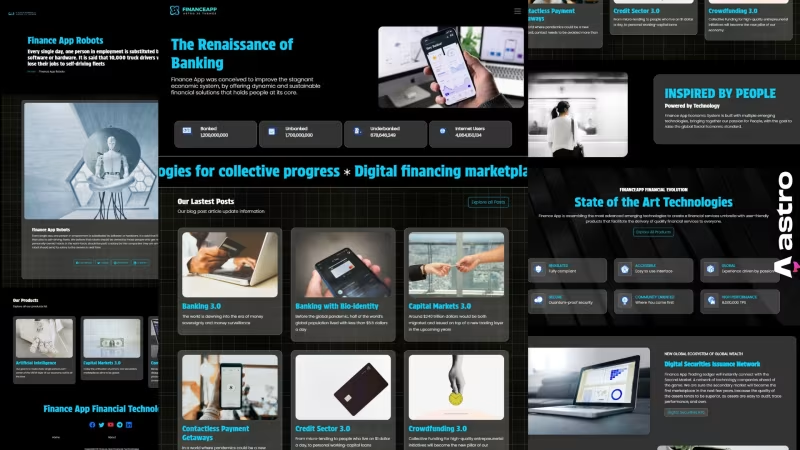
Table Of Content
- Introduction
- Overview of Finance App - Astro Startup Template - SaaS, Finance, App Landing
- Overview of Docus - Astro Starlight Docs Template - Documentation, Blog, Landing
- Features Comparison
- Base Framework and Structural Architecture
- Content Management and Formatting: MDX vs Component Widgets
- User Interface, Sidebar Navigation, and Search Capabilities
- Commercial Landing Pages vs Documentation Hubs
- Contact Form Integration and Interactive Widgets
- SEO Automation and Performance Optimization
- Installation, Folder Structure, and Cloud Deployment Workflows
- Pricing
- Who Should Choose Finance App - Astro Startup Template - SaaS, Finance, App Landing
- Financial Technology & Banking Startups
- SaaS & Artificial Intelligence Product Founders
- Digital Marketing Agencies & Web Developers
- Mobile Application Developers Needing an App Landing Page
- Who Should Choose Docus - Astro Starlight Docs Template - Documentation, Blog, Landing
- Software Development Teams & Open Source Maintainers
- Developer Tool Vendors & API Platform Creators
- Technical Content Creators & Developer Advocates
- Product Teams Requiring Integrated Dark Mode & Search
- Verdict
- See It Live
- Related Themes
Introduction
Building a modern web presence for software products, financial applications, or developer tools requires a careful selection of foundational frontend architecture. Web developers, SaaS founders, and technical writers face a common challenge: choosing a website template that balances performance, search engine optimization, content structure, and long-term maintenance costs. Modern static site architecture has shifted heavily toward Jamstack methodologies, where static output HTML provides immediate page loads, robust security profiles, and minimal hosting overhead.
Astro JS has emerged as a premier framework for building content-focused websites. By utilizing an island architecture that minimizes client-side JavaScript execution, Astro enables fast load speeds right out of the box. However, project requirements dictate the choice of boilerplate. A financial technology startup selling a software-as-a-service application needs landing pages designed around conversions, product features, pricing tiers, and promotional blogs. Conversely, a developer tool vendor or technical team requires structured documentation layouts, integrated search interfaces, categorized knowledge bases, and MDX file support.
This article provides an in-depth comparison between two specialized pre-built solutions: Finance App - Astro Startup Template - SaaS, Finance, App Landing and Docus - Astro Starlight Docs Template - Documentation, Blog, Landing. By examining their architectural foundations, layout structures, content management models, interactive feature sets, deployment workflows, and pricing, technical teams can select the precise template required for their digital platform. Both themes deliver static output builds, automatic SEO generation, full source code ownership, and one-time licensing fees without ongoing subscription obligations.
Overview of Finance App - Astro Startup Template - SaaS, Finance, App Landing
Finance App is a multipurpose web template tailored for financial technology companies, SaaS platforms, AI product offerings, and mobile app landing pages. Built directly on top of the core Astro JS framework, this template uses a Bootstrap responsive grid system to structure user interfaces across desktop, tablet, and mobile viewports. Designed to present commercial product value quickly, the theme organizes content into functional marketing sections including structured hero headers, product display areas, feature lists, pricing tables, dedicated about pages, interactive contact forms, and custom blog widgets.
The primary objective of Finance App is to remove the engineering friction involved in launching marketing websites for complex software services. Developers purchasing the template acquire full access to the source code, allowing complete customization of visual styling, component hierarchies, and content fields. The theme is configured out of the box to build pure static output files, making it suitable for global deployment to modern cloud edge networks such as Netlify, Vercel, and Cloudflare Pages.
Configuring the Finance App template involves straightforward file-based settings for managing site metadata, navigation bar options, and footer content. The code base is organized logically into dedicated directories for components, pages, public assets, and styling scripts. Adding new product entries or authoring blog posts follows standard Astro component workflows, enabling fast site updates without relying on heavy external runtime software or complex content management systems.
For teams looking to inspect the visual architecture and component flow of this boilerplate, detailed layout previews are available on the official /themes/astro/new-astro-js-multipurpose-themes-financeapp/ reference page.
Overview of Docus - Astro Starlight Docs Template - Documentation, Blog, Landing
Docus is a specialized documentation and knowledge-base template constructed on top of Astro and the Astro Starlight documentation framework. Developed specifically for software projects, open-source utilities, developer platforms, and technical documentation suites, Docus combines a comprehensive documentation site with a functional product landing page, a pricing matrix, and a categorized blog engine. Content within Docus is driven primarily by structured JSON data and MDX (Markdown for JSX) documents, enabling technical writers to write documentation using markdown while embedding interactive UI components directly into the content stream.
The core strength of Docus lies in its developer-focused user experience features. The theme incorporates an integrated search interface accessible via keyboard shortcuts (Ctrl+K), standard sidebar navigation organized by document groups, group index pages featuring card grids, and built-in visual theme switches supporting dark mode, light mode, and system auto mode preferences. This makes it an ideal platform for technical documentation where fast content discovery and readability across extended reading sessions are essential requirements.
Setting up Docus involves configuring documentation sidebars, defining sidebar group structures, creating index cards, and managing static pages such as about or ordering pages. The included blog engine features full taxonomy management with visual category tags and customizable page pagination controls. Like its finance-focused counterpart, Docus generates static build artifacts ready for edge network deployment and grants users 100% source code ownership through a single one-time purchase.
Engineers and documentation managers interested in evaluating the technical architecture, MDX setup, and Starlight implementation of this platform can access full structural details via the /themes/astro/starlight-doc-astro-js/ landing page.
Features Comparison
Base Framework and Structural Architecture
While both products utilize Astro JS as their foundational build engine, their underlying structural dependencies serve vastly different project requirements. Finance App uses a classic multipurpose web architecture paired with a Bootstrap responsive grid layout. This architecture prioritizes visual flexibility, grid-based container alignments, custom promotional widgets, and marketing landing sections. Its component structure is designed to showcase visual assets, software preview screenshots, key selling points, and call-to-action modules with minimal layout constraints.
Docus, on the other hand, is built directly upon the Astro Starlight framework ecosystem. Starlight provides specialized infrastructure built explicitly for technical writing, including automated table-of-contents generation, deeply nested sidebar tree hierarchies, breadcrumb navigation, and canonical link handling. Where Finance App focuses on visual marketing grids, Docus focuses on strict typographic grids, high contrast readability, structural hierarchy, and technical content presentation.
Content Management and Formatting: MDX vs Component Widgets
Content handling in Finance App centers around traditional template components, structured markdown, and dedicated widget logic for products and blog posts. Content managers update the homepage by editing discrete section components—such as the Intro Section, Product Section, and List Section—located within the project's folder structure. Updating site-wide options, top-level navigation bar links, and footer columns is accomplished through centralized configuration files. This component-centric model works well for landing pages where individual visual elements require custom HTML structures and styled CSS classes.
Docus leverages MDX (Markdown for JSX) alongside structured JSON data files as its primary content pipeline. Documentation pages, static informational pages, and blog posts are authored directly in MDX files located inside content directories. This setup allows technical writers to write standard Markdown text for rapid documentation production while having the ability to import and render dynamic UI components directly inside the document stream. Furthermore, the Docus blog engine incorporates robust content classification systems using tags and categories alongside configurable pagination parameters to organize extensive technical article archives.
User Interface, Sidebar Navigation, and Search Capabilities
Navigation design represents one of the most visible structural differences between these two templates:
- Finance App: Implements a standard marketing header navigation bar combined with section anchors, multi-page links (About, Docs, Product, Blog, Order, Contact), and a structured site footer. The navigation layout is designed to guide prospective customers through a traditional sales funnel, directing traffic toward product features, subscription tiers, and contact conversion forms.
- Docus: Implements a developer-oriented documentation navigation interface. It features a persistent sidebar configured to group complex documentation topics into collapsible or organized categories. To navigate large documentation repositories, Docus provides a keyboard-driven search interface triggered by the standard Ctrl+K command, allowing users to query document titles and body copy instantly. Additionally, Docus includes built-in theme switching logic allowing readers to alternate between Dark, Light, and Auto visual modes.
+-----------------------------------------------------------------------+
| FEATURE MATRIX                                                        |
+-----------------------------------+-----------------------------------+
| Feature                           | Finance App                       | Docus                             |
+-----------------------------------+-----------------------------------+
| Primary Focus                     | SaaS, Fintech, AI Landing Pages   | Tech Docs, Software Manuals, Blog |
| Underlying Engine                 | Astro JS + Bootstrap Grid         | Astro JS + Astro Starlight        |
| Content Formats                   | Standard Components, MD, Widgets  | MDX Ready, JSON Managed           |
| Navigation System                 | Header Navbar & Footer Links      | Sidebar Tree, Header, Index Cards |
| Search Functionality              | Basic Page Navigation             | Built-in Search Engine (Ctrl+K)   |
| Theme Mode Switcher               | Single Designed Theme             | Dark / Light / Auto Mode Included |
| Core Content Sections             | Hero, Intro, Product, List, Price | Docs Groups, Cards, MDX Pages     |
| Static Build Output               | Yes (HTML/CSS/JS)                 | Yes (HTML/CSS/JS)                 |
| One-Time License                  | $55                               | $65                               |
+-----------------------------------+-----------------------------------+
Commercial Landing Pages vs Documentation Hubs
Finance App provides a comprehensive array of built-in components built for commercial conversion. Its template payload includes dedicated UI blocks for displaying SaaS product features, feature comparison grids, list sections highlighting app benefits, interactive pricing tables, and localized widget areas for product listings. The layout is optimized to convey business value propositions quickly, using custom graphic containers, call-to-action buttons, and trust indicators suited for commercial fintech and software applications.
Docus includes a product landing page and pricing section, but its primary focal point remains the documentation hub. Docus includes a dedicated component layout for building Group Index Pages. These pages use grid-based cards to present top-level documentation sections to readers, directing them into specific manual guides or API documentation hierarchies. While Docus can market a product via its included landing layout, its visual hierarchy gives priority to technical manual consumption and structural clarity over marketing conversion funnels.
Contact Form Integration and Interactive Widgets
Both templates recognize the need for user communication, though they manage backend interactions via static-friendly patterns. Finance App incorporates a dedicated contact page layout equipped with a styled contact form designed to capture inbound sales inquiries, customer feedback, or partnership requests. Because the build pipeline generates static HTML outputs, the contact form can be linked to serverless form handling endpoints such as Formspree, Netlify Forms, or custom API gateways.
Docus also includes contact form functionality suited for technical support requests, order inquiries, or general communication. In addition to contact forms, Docus provides interactive UI elements tailored for documentation environments, such as code block display tools, copy-to-clipboard functionality native to Astro Starlight, static order pages, and multi-category blog archive filters.
SEO Automation and Performance Optimization
Static site architecture inherent to Astro JS ensures that both Finance App and Docus deliver performance metrics across Core Web Vitals assessments. Because the framework strips away unnecessary runtime JavaScript by default, static HTML pages served directly from edge storage load rapidly on both mobile devices and low-bandwidth connections.
Automated SEO management is built into both templates:
- Metadata Generation: Both themes automatically assemble page titles, meta descriptions, canonical URLs, and Open Graph parameters based on central configuration files or document frontmatter metadata.
- Structured Data & Indexing: Canonical link generation and automated sitemap creation ensure search engine crawlers can index pages without manual meta-tag maintenance.
- Asset Optimization: CSS stylesheets and static image assets are minimized during the Astro build step, reducing network transfer sizes across all site pages.
Installation, Folder Structure, and Cloud Deployment Workflows
The developer workflow for installing and maintaining both templates follows standard Node.js package management procedures. After downloading the project repository, developers execute package installation commands (npm install or pnpm install) to set up dependencies locally. Local development servers run via standard scripts (npm run dev), giving engineers instant hot-module reloading during content creation.
The project folder structure in both themes separates visual templates from static content:
- In Finance App, components, pages, and layouts reside within structured directories, making it straightforward to add new static routes, modify Bootstrap grid break-points, or update global site styling.
- In Docus, the folder hierarchy aligns with Astro Starlight conventions. A dedicated content directory houses the MDX files categorized into documentation sub-folders, alongside separate configuration files used to populate the main sidebar hierarchy and JSON data collections.
For deployment, both projects produce pure static distribution directories (/dist) upon executing the build command (npm run build). These static build artifacts require no persistent Node.js application server, rendering them completely compatible with zero-cost edge hosting services like Netlify, Vercel, Cloudflare Pages, GitHub Pages, or traditional web hosting server environments via standard FTP/SSH file uploads. Furthermore, both code bases support integration with headless Content Management Systems (CMS) if teams choose to connect an external content API to manage MDX or JSON file outputs automatically.
Pricing
When selecting web development boilerplates, financial transparency and long-term licensing models are critical considerations for businesses and independent creators alike. Traditional cloud-hosted site builders often enforce recurring monthly or annual subscription fees per website, which accumulate significantly over the lifecycle of a product.
Both Finance App and Docus operate on a developer-friendly single purchase model:
- Finance App - Astro Startup Template - SaaS, Finance, App Landing is available for a one-time payment of $55. This purchase price grants full access to the source code repository, visual assets, grid components, layout scripts, and deployment configuration files without any recurring licensing charges or hidden domain maintenance costs.
- Docus - Astro Starlight Docs Template - Documentation, Blog, Landing is priced at a one-time fee of $65. The slightly higher price point reflects the addition of the Astro Starlight framework integration, built-in search system, dark/light theme switching engine, MDX content parser pipelines, group index card layouts, and documentation taxonomy features.
Both licenses include 100% source code ownership, permitting developers to modify, customize, host, and refactor the code base to meet their exact operational requirements.
Who Should Choose Finance App - Astro Startup Template - SaaS, Finance, App Landing
Financial Technology & Banking Startups
Companies launching online banking platforms, personal finance apps, crypto wallets, or payment processing services require a web presence focused on user acquisition and trust building. Finance App provides visual structures explicitly tailored for this vertical, including product feature showcases, list sections outlining operational security, pricing tables for service tiers, and clear call-to-action buttons designed to drive account signups or application downloads.
SaaS & Artificial Intelligence Product Founders
Software-as-a-Service founders and AI app creators who need to deploy a high-performance marketing website rapidly will benefit from Finance App's layout architecture. The included home header area, intro section, and feature matrix allow founders to communicate technical software functionality to non-technical buyers. The static build output ensures marketing landing pages load quickly, maximizing conversion rates during ad campaigns or product launches.
Digital Marketing Agencies & Web Developers
Web development agencies managing client projects for commercial clients require clean, maintainable code bases that can be customized quickly. Finance App's rely on the familiar Bootstrap grid system, enabling front-end developers to adapt layout styles, modify typography, or add custom components without dealing with complex framework abstractions.
Mobile Application Developers Needing an App Landing Page
Developers releasing iOS or Android applications require promotional landing pages that feature screenshot galleries, app store download links, customer testimonials, and basic product descriptions. Finance App serves as an efficient app landing template, offering mobile-responsive grid container layouts that render cleanly on handheld devices.
Who Should Choose Docus - Astro Starlight Docs Template - Documentation, Blog, Landing
Software Development Teams & Open Source Maintainers
Engineers, technical writers, and open-source project maintainers requiring a robust knowledge base or product documentation hub should select Docus. Built on Astro Starlight, Docus provides essential developer documentation tools out of the box, including structured sidebar navigation, automatic page outline generation, multi-code block formatting, and native Ctrl+K command search functionality.
Developer Tool Vendors & API Platform Creators
Companies selling technical products—such as API services, developer infrastructure, cloud databases, or software SDKs—require a unified website that provides both top-level marketing pages and comprehensive technical manuals. Docus satisfies both requirements within a single repository, supplying a high-level landing page and pricing table alongside deep, structured documentation groups for API endpoints and developer integration guides.
Technical Content Creators & Developer Advocates
Writers producing technical blogs, software tutorials, and long-form coding guides benefit greatly from Docus's MDX and taxonomy support. The built-in blog engine allows authors to tag and categorize articles while utilizing customizable pagination systems. The ability to write articles in standard MDX format means authors can write content in text editors while easily embedding interactive components, callout boxes, or dynamic code snippets.
Product Teams Requiring Integrated Dark Mode & Search
For products aimed at software engineers and technical professionals, features like dark mode reading environments and instant client-side content search are expected standard features. Docus includes integrated dark, light, and automatic system theme switching alongside real-time search functionality, eliminating the need to select, configure, and maintain third-party search plugins or visual theme toggle scripts.
Verdict
Selecting between Finance App and Docus ultimately depends on the primary functional focus of your project. Both templates offer static build output, rapid load speeds, automatic SEO configuration, deployment options across edge platforms like Cloudflare Pages or Netlify, and full source code ownership through a single one-time purchase.
If your primary business goal is commercial marketing, customer acquisition, software feature demonstration, and sales lead generation, Finance App is the superior option. Its Bootstrap grid architecture, product showcases, pricing tables, hero intro sections, and lightweight static footprint provide everything required to market SaaS applications, fintech tools, mobile apps, and commercial services effectively.
If your primary project goal is technical documentation delivery, knowledge base creation, developer docs, and MDX-driven technical writing, Docus is the clear winner. Built upon the Astro Starlight engine, its sidebar tree navigation, keyboard-shortcut search capabilities, dark mode theme toggle, group index card matrices, and categorized blog system provide a comprehensive infrastructure for developer-facing communication.
Evaluate your target audience: choose Finance App to convert prospective software buyers into customers, or choose Docus to educate developers and users through structured technical documentation.
See It Live
To inspect the visual styling, responsive design layouts, component interactions, and live user experiences of both templates in action, visit their official live demonstration instances:
- Demo A: Finance App - Astro Startup Template - SaaS, Finance, App Landing
- Demo B: Docus - Astro Starlight Docs Template - Documentation, Blog, Landing
Related Themes
To discover additional specialized Astro templates, landing page designs, documentation themes, and SaaS web boilerplates, explore our full directory listings:
- Browse the complete theme collection at All Themes.
- Explore advanced commercial templates at Premium Themes.
← In-Depth Look at Angular Car Rental Template - Car Booking, Fleet, Reservation Website - Features, Pricing & VerdictFinance App - Astro Startup Template - SaaS, Finance, App Landing vs PaperHouse - Astro Bento Portfolio Template - Works, Blog, Docs, Order - Honest Feature Comparison →
Need Custom?
Hire via Fiverr Escrow
72+ verified reviews, escrow protected.
ORDER CUSTOM →